
For years, sustainability teams have struggled with a storytelling problem.
We can explain carbon. We can explain biodiversity. We can even explain soil organic matter. But when those ideas leave the conference room and arrive at the dinner table, something gets lost. Most people don’t wake up thinking about nitrogen cycles or cover cropping. They wake up thinking about breakfast, their kids’ lunches, and whether the food they buy is healthy for their families.
What if the most powerful outcome of regenerative agriculture is also the most intuitive?
Nutrient density.
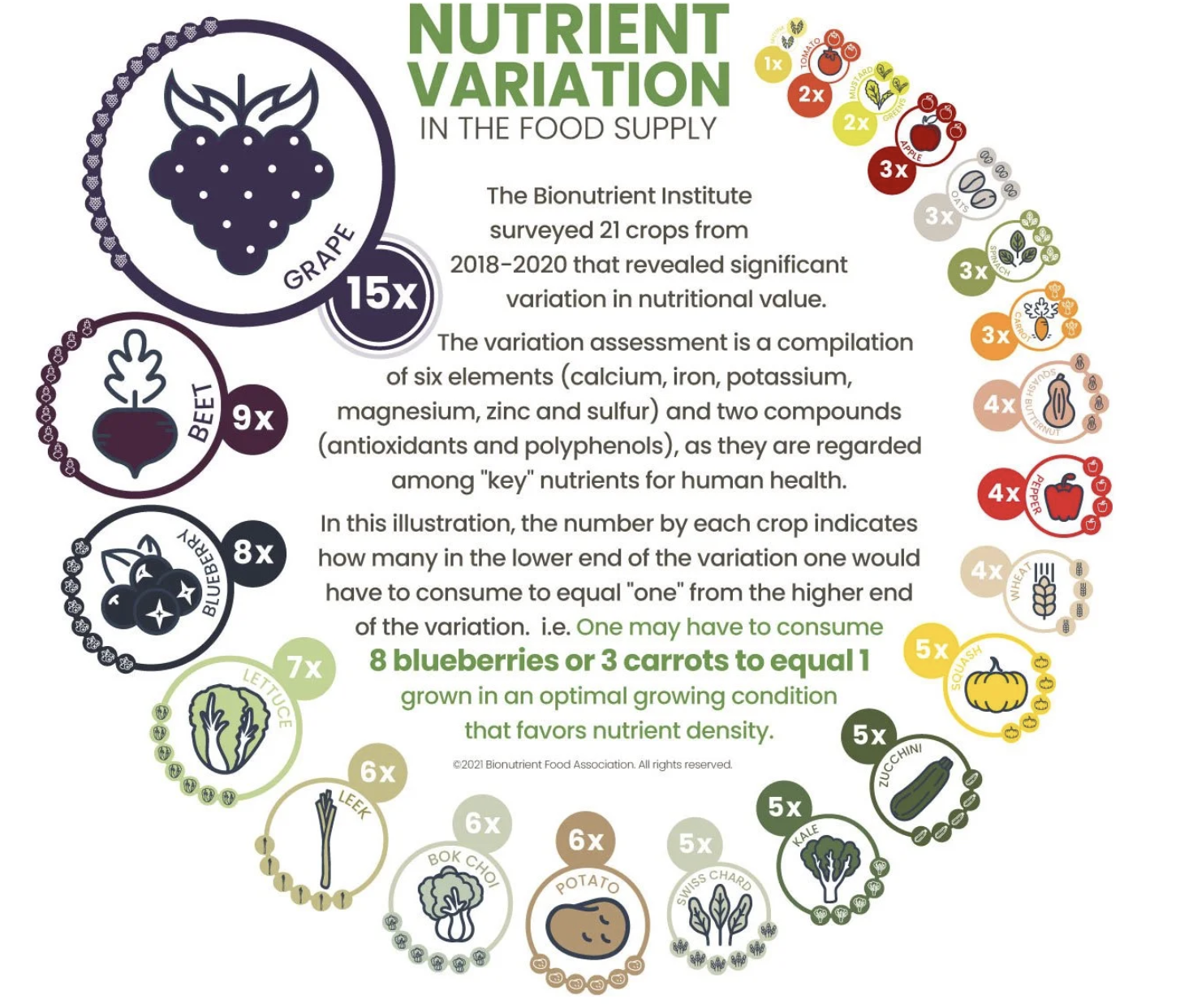
The idea is simple: the same apple, potato, or glass of milk can contain dramatically different levels of essential vitamins, minerals, amino acids, and antioxidants depending on how it was grown. Healthy soils, rich with microbial life, can translate into healthier plants – and more nutritious food.
Regenerative agriculture leans into practices that rebuild biological cycles – cover crops feeding soil microbes, reduced tillage protecting soil structure, diverse crop rotations supporting microbial diversity, livestock integrated with cropping systems, and manure returning nutrients and organic matter back to the soil.
The connection between soil health and nutrient density isn’t new. What’s changed is our ability to measure it. Advances in food testing are making nutrient analysis faster and cheaper, while broader cultural forces are making nutrition more salient – from the rise of GLP-1 drugs and the MAHA movement to growing consumer interest in clean and functional foods.
As a result, a growing body of research is quantifying the connection. For example, a comparative study found that peas, corn, sorghum, and soybeans grown on regenerative farms contained 34% more vitamin K and 15% more vitamin E, while beef from regenerative grazing systems has been shown to contain three times more omega-3 fatty acids than conventional beef[1].
This matters because nutrient density reframes the story.
Most sustainability conversations have focused on reducing harm: fewer emissions, less water use, and biodiversity loss. Important goals, but abstract and disconnected from the consumer. Nutrient density shifts the conversation toward a direct benefit people immediately understand and are seeking: this food is better for you.
In other words, the value proposition becomes personal.
At the heart of this is a connection we are only beginning to fully appreciate: soil health and gut health.
In the last decade, science has revealed the extraordinary importance of the human gut microbiome – the trillions of microbes that influence digestion, immunity, and even mental health. When that microbial ecosystem is diverse and balanced, our bodies function better.
At the center of all of this is soil.
A healthy soil is not just dirt. It is an underground microbiome – bacteria, fungi, protozoa, and microscopic organisms constantly cycling nutrients, feeding plant roots, and building the biochemical complexity that ultimately becomes the nutrients in our food.
One farmer we work with in Nebraska described the moment this clicked for him:
“When I started really learning about the microbial relationship between the soil and the plant, a light bulb went off. I realized I was spending all this time thinking about what we feed the soil microbes – and almost no time thinking about what we feed our own gut microbes. And the truth is, these things go hand in hand. It’s a self-supporting cycle – one that conventional agricultural – too much tillage, mismanagement of synthetic input – has degraded.”
That same perspective is showing up in clinical practice as well. Sally Hillis, PhD RD who has been practicing for forty years sees it with her clients:
“In my personalized nutrition practice, I work with clients across a wide range of health concerns, many of which stem from issues in the gut. What I consistently see is that people can be eating what looks like a healthy diet, but are still nutritionally deficient. The health of the gut microbiome is influenced by the quality of food; when that quality is lacking, it can lead to low energy levels, inflammation, and challenges with weight management.”
That insight opens a new possibility for companies.
For decades, food quality conversations have focused largely on what’s not in food: no pesticide residues, no antibiotics, no microplastics. Important assurances – but fundamentally defensive. Wouldn’t you also want to know that the food you’re eating isn’t just free from the bad stuff – but actually contains more of the good?
What if food companies could compete on what is in their food?
Imagine a brand being able to say: our milk is better for you because it contains higher levels of omega-3 fatty acids, calcium, and vitamin B12 due to how the farm was managed.
That is a claim consumers immediately understand.
It’s also increasingly measurable. New companies like Edacious are analyzing food for nutrient density and building benchmarks for what “better” actually looks like – enabling comparisons across farming systems such as conventional and organic. By linking those measurements back to on-farm practices, they make it possible for brands to make credible claims about nutritional quality and demonstrate how farming practices improve the food itself.
For companies trying to communicate the value of regenerative agriculture, this may be the missing bridge.
Consumers may not fully grasp soil carbon sequestration or ecosystem services. But they understand the idea that the same apple, potato, or glass of milk could be more nourishing.
Perhaps that’s the deeper shift underway.
For decades, industrial agriculture optimized for yield – the quantity of food per acre. Regenerative agriculture invites a different question: what if we optimized for the quality of nourishment per acre?
Because ultimately, food is not just calories.
It is information from the soil, translated through plants, into the biology of our own bodies.
And when the soil microbiome thrives, the benefits don’t stop at the farm gate.
They arrive on the plate.
———
[1] Soil health and nutrient density: preliminary comparison of regenerative and conventional farming. PeerJ. 2022 Jan 27